

Motherboard micro-soldering: why you should call an expert
Motherboard micro-soldering is a rare expertise. GPU reballing, baseband chips, charging circuits: discover why Safe is the reference in France.
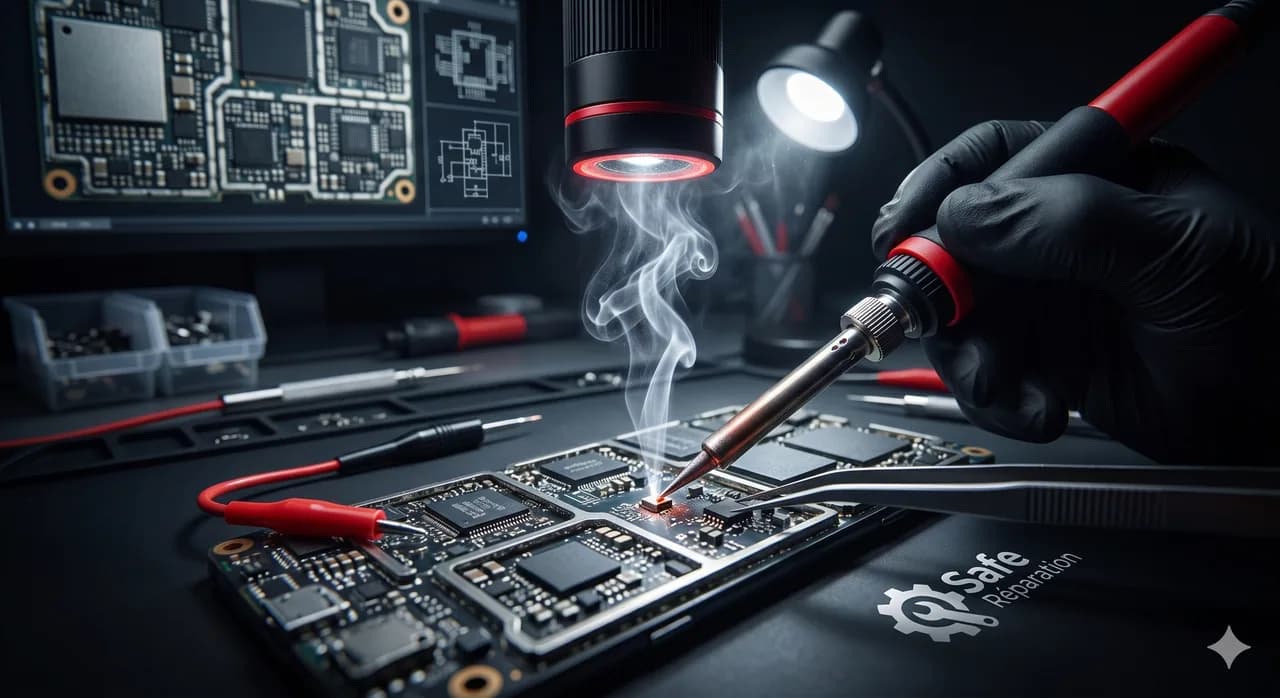
Your iPhone won't turn on, has no network, won't charge, and you're told it's the motherboard? In most cases, it's not the entire motherboard that's faulty, but a microscopic component soldered onto it. That's where micro-soldering comes in: an ultra-precise repair technique that replaces chips just a few millimeters wide to bring back to life a device everyone thought was dead. But beware: this is a specialized trade that very few repairers truly master.
What is motherboard micro-soldering?
Micro-soldering refers to all soldering techniques used to repair miniaturized components on smartphone, tablet, and laptop motherboards. Work is done at the tenth-of-a-millimeter scale, under a binocular microscope, using hot air soldering stations and ultra-fine tip soldering irons.
Specifically, your iPhone's motherboard contains hundreds of SMD (Surface Mount Device) components: processors, charge controllers, memory chips, baseband chips (network), audio circuits, gyroscopes... Each of these components can fail individually and be replaced, provided you have the equipment, parts, and above all the expertise.
Common micro-soldering repairs
Here are the micro-soldering repairs we perform most frequently at Safe:
GPU/CPU reballing: the graphics or main processor de-solders over time due to thermal shocks. Reballing involves redoing the micro solder balls under the chip to restore contact. This is the flagship micro-soldering procedure.
Baseband chip replacement: this chip manages network connectivity (4G/5G, Wi-Fi, Bluetooth). If your iPhone displays 'No Service' or 'Searching...' permanently, the baseband chip is likely the cause.
Charging circuit repair: when replacing the charging port isn't enough, the problem often comes from the charge controller chip (Tristar or Hydra chip on iPhone). Its replacement requires precise micro-soldering.
Water damage repair: water causes short circuits and corrosion on motherboard components. Micro-soldering allows damaged components to be replaced after ultrasonic cleaning.
Memory chip (NAND) replacement: to recover data from an iPhone that won't boot, or to increase storage capacity.
Audio circuit repair: microphone, speaker, or stuck headphone mode issues are often linked to faulty SMD components on the motherboard.
Why most repairers don't do micro-soldering
Related articles
 guides
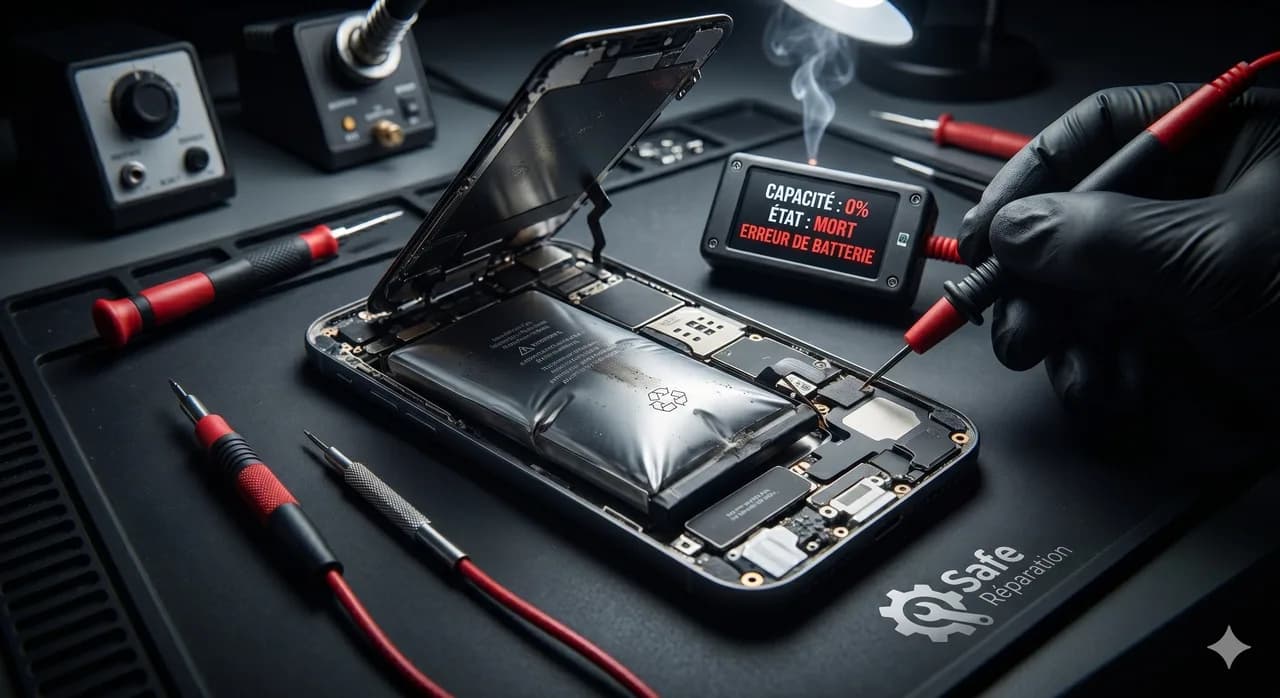
How to tell if your iPhone battery is dead
Is your iPhone draining too fast or shutting down for no reason? Here are the 6 signs that your battery is at the end of its life and needs to be replaced.
 guides
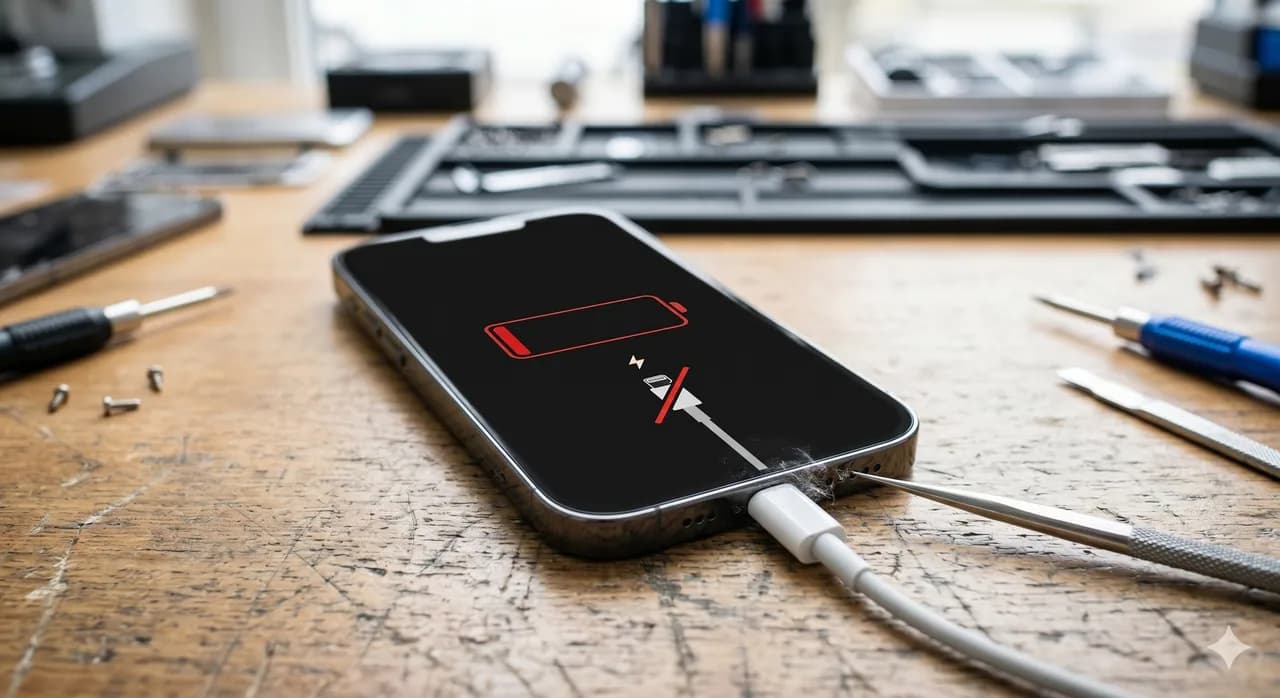
iPhone won't charge: 5 solutions before repair
Your iPhone won't charge? Before heading to a repair shop, try these 5 simple solutions. And if nothing works, Safe repairs it in 30 min.
 guides
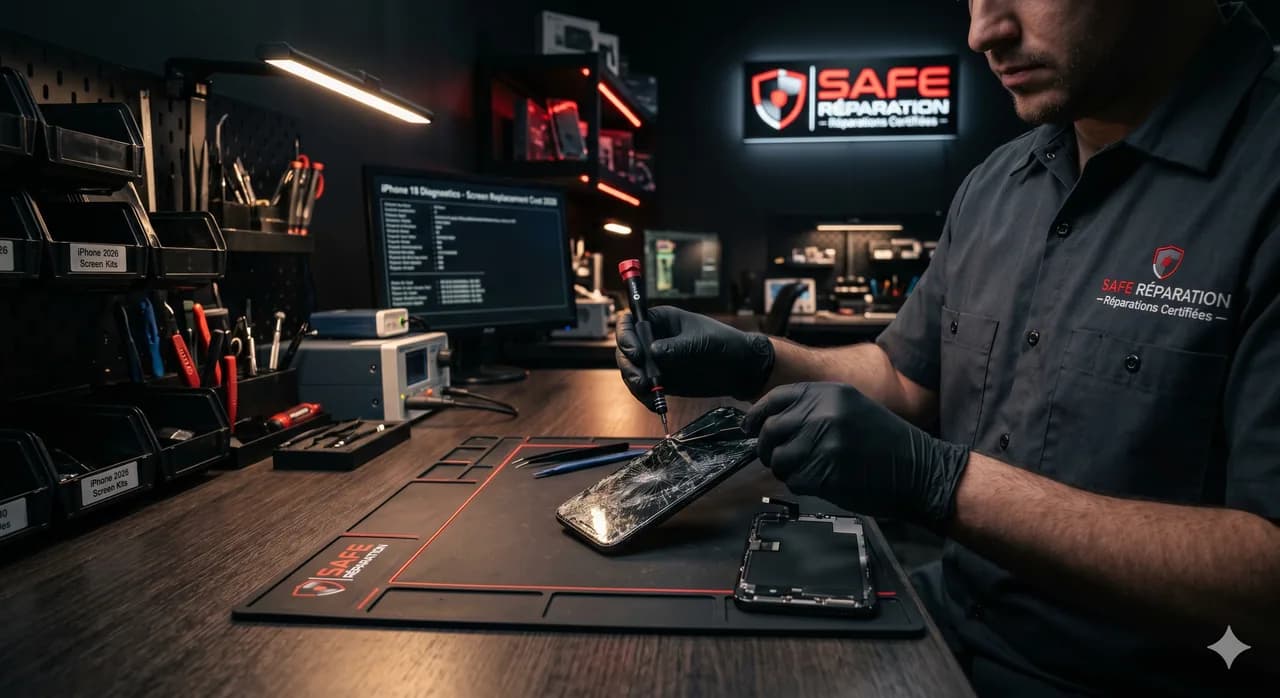
How much does iPhone screen repair cost in 2026?
How much to repair an iPhone screen in 2026? From €49 to €350 depending on the model. Discover our prices by generation and why choose Safe.
Stay informed with The Safe Mag
Tutorials, deals and tech news straight to your inbox. No spam, promise.