

iPhone 17 Air: is Apple's thinnest smartphone also its most fragile?
6.25 mm thick: the iPhone 17 Air is Apple's thinnest ever. But this thinness comes at a price in terms of durability and repairability, which Marc analyzes.
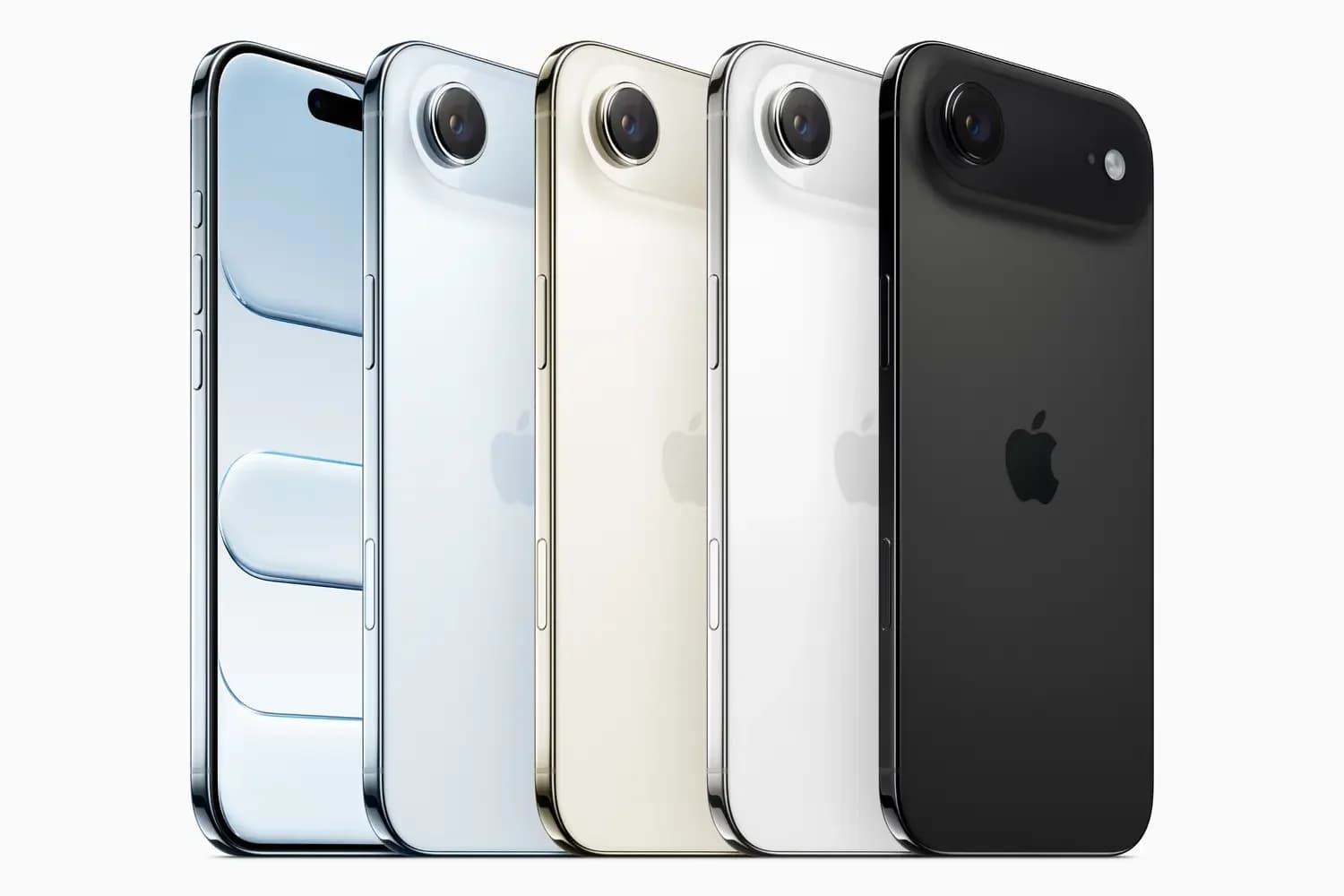
Apple released the iPhone 17 Air in September 2025 with a central marketing argument: 6.25 mm thickness, the thinnest smartphone ever produced by the brand. On the keynote photos, it''s indeed impressive. In the repair store, it immediately raises a question that the slides don''t mention: what does this thinness imply for durability and repairability?
Ever since the iPhone 17 Air was released, we've been seeing them come and go in our workshops. Not hundreds yet - it''s too early - but enough to start forming an opinion. What's interesting is that the constraints we were anticipating match up quite well with what we're seeing.
6.25 mm: what this thickness means in practice
To understand why thinness is an issue for repairability, we need to understand what's going on inside. In a smartphone, thickness determines the space available for each component: battery, motherboard, heat sink, screen panel, camera module. When the overall thickness is reduced, each component undergoes a stress.
On the iPhone 17 Air, Apple has opted for an L-shaped battery - an unusual shape that optimizes the space available in the slim chassis. This is a real technical innovation. But an L-shaped battery is more complex to replace than a standard rectangular one: the adhesive tabs are repositioned, access is more restricted, and the risk of bending the cell during removal is higher.
The chassis itself is made of 7000-series aluminum - the same alloy used on sports models. Apple has compensated for its thinness with a stiffer alloy. This is not insignificant: a stiffer chassis transmits shock differently. It bends less, but impact vibrations reach the internal components more directly.
What drop tests reveal
The first independent drop tests, carried out in the weeks following release, show a different resistance profile to the Pro models. The iPhone 17 Air is relatively resistant to drops from pocket height onto hard surfaces - the Ceramic Shield on the front and the glass on the rear hold up well. Where it gets interesting is on corner drops: the thin chassis concentrates the impact on a smaller surface, increasing local pressure.
In the store, we've seen a few iPhone 17 Air models with chassis deformation after a drop - proportionally more frequent than on an iPhone 16. Nothing to be alarmed about in absolute terms, but here's the rub: a deformed chassis on such a slim device can put stress on the screen and internal connecting cables, even without any visible surface breakage.
Repairability: is the iPhone 17 Air harder to open?
Apple has retained the principle of opening through the rear panel, introduced on the iPhone 15. This is a good thing. But the workspace inside is more constrained. The panels are thinner and shorter, and connectors are positioned in less accessible areas. It takes longer to perform operations that, on an iPhone 16, have become almost routine.
Stay informed with The Safe Mag
Tutorials, deals and tech news straight to your inbox. No spam, promise.